In short: make one ad for each kind of buyer: a commercial for people who have never heard of you, a product demo for people comparing options, and a testimonial for people ready to buy. Build the demo as hook, demo, proof, offer and next step, with the product or the problem in the first 3 seconds. For Instagram Reels ads, Meta recommends 9:16 at 1440 × 2560, asks you to keep the top 14%, the bottom 35% and 6% of each side clear of text, and doesn't allow licensed music.
Three ads for three kinds of buyer
A single "brand video" tries to talk to everyone at once. In practice, the person who has never heard of you and the person deciding between you and a competitor need different ads.
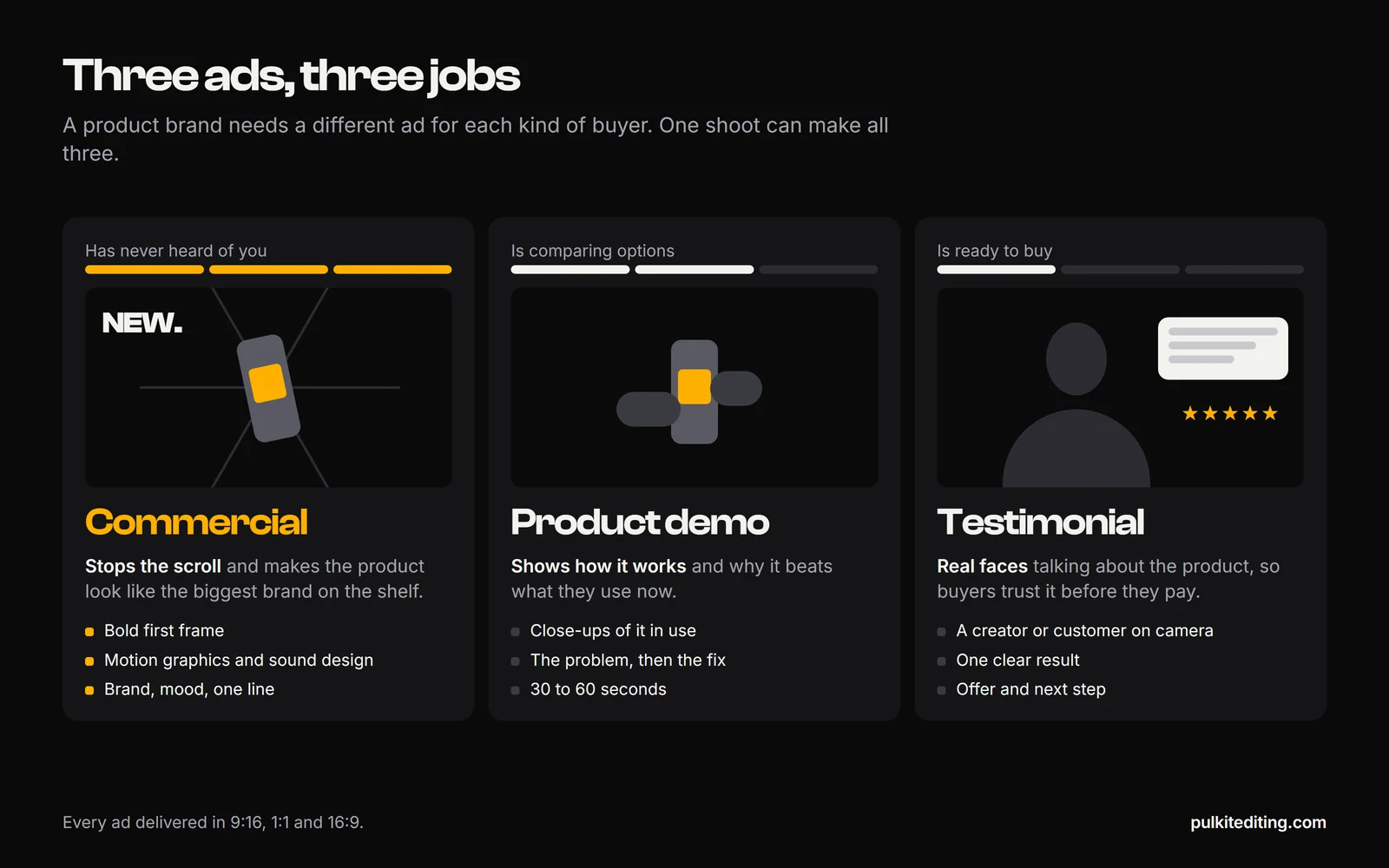
- The commercial is for people who have never heard of you. It stops the scroll and makes the product look like the biggest brand on the shelf: a bold first frame, motion graphics, sound design and one line.
- The product demo is for people comparing options. It shows how the product works and why it beats what they use now, in close-ups, usually in 30 to 60 seconds.
- The testimonial is for people ready to buy. A real person on camera, a creator or a customer, says what changed for them, so buyers trust the product before they pay.
All three can come out of one shoot day, which is how I plan the Full-Funnel Ad Pack in my Ads That Sell Studio. Every ad is then cut in 9:16 for Reels and Stories, 1:1 for the feed, and 16:9 for YouTube and the web.
How I build a 30-second product demo ad
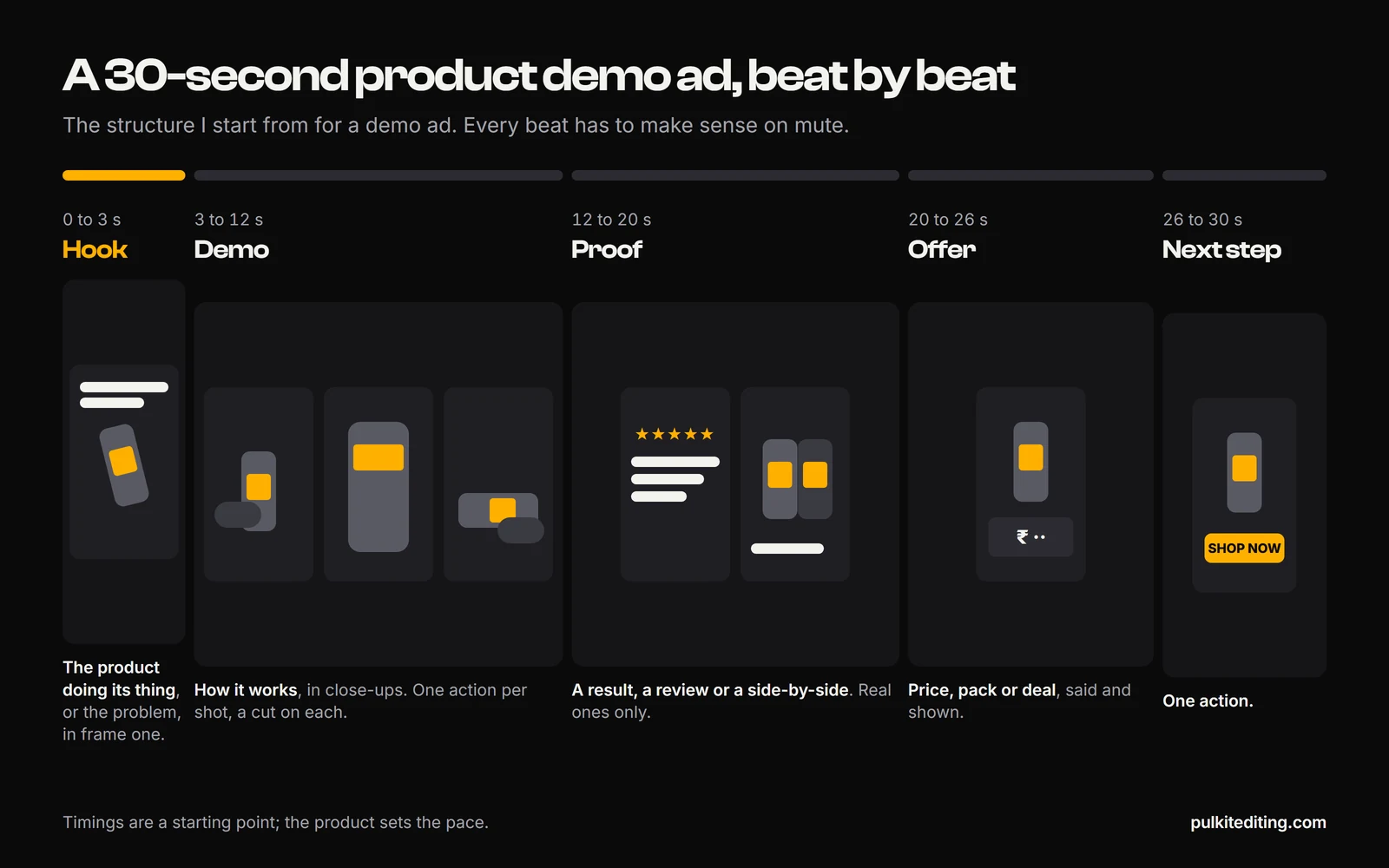
- Hook, 0 to 3 seconds. The product doing its thing, or the problem it solves, in the first frame. Not a logo, not a slow reveal.
- Demo, 3 to 12 seconds. How it works, in close-ups. One action per shot, with a cut on each, so the viewer's eye always has somewhere new to go.
- Proof, 12 to 20 seconds. A result, a review or a side-by-side with the usual alternative. Real ones only: an invented result can get the ad rejected, and it costs you the customer's trust.
- Offer, 20 to 26 seconds. The price, the pack or the deal, said aloud and shown on screen.
- Next step, 26 to 30 seconds. One action: shop, try, book.
Every beat has to make sense on mute. Put the main words on screen as text, keep them inside the safe zone, and let the voice and sound effects add to what the picture already says.
A shot list you can hand to any studio
These are the shots I plan for a product shoot. Not every product needs all of them, but every ad above is built from this list.
| Shot | What it shows | Used in |
|---|---|---|
| Hero | The product on a clean surface, with a slow push-in | Commercial, offer |
| In hand | Picked up, opened, used, from the user's point of view | Demo |
| Macro detail | Texture, pour, fizz, crumb, stitching or label up close | Commercial, demo |
| The problem | The usual way going wrong: slow, messy, broken | Demo hook |
| The result | The after state, held long enough to read | Demo, testimonial |
| Side-by-side | With and without, or against the usual alternative | Proof |
| Person to camera | A creator or customer saying one specific result | Testimonial |
| Lifestyle | The product where it is really used: desk, gym bag, kitchen | Commercial |
| Pack shot with space | The product with clean room for the price and offer text | Offer, next step |
| Three hook openers | Three different first 3 seconds for the same ad | Testing |
The last row is the cheapest way to improve an ad. Your media buyer can test three openings against each other and keep the winner, without paying for a second shoot.
Instagram Reels ad specs, from Meta's guide
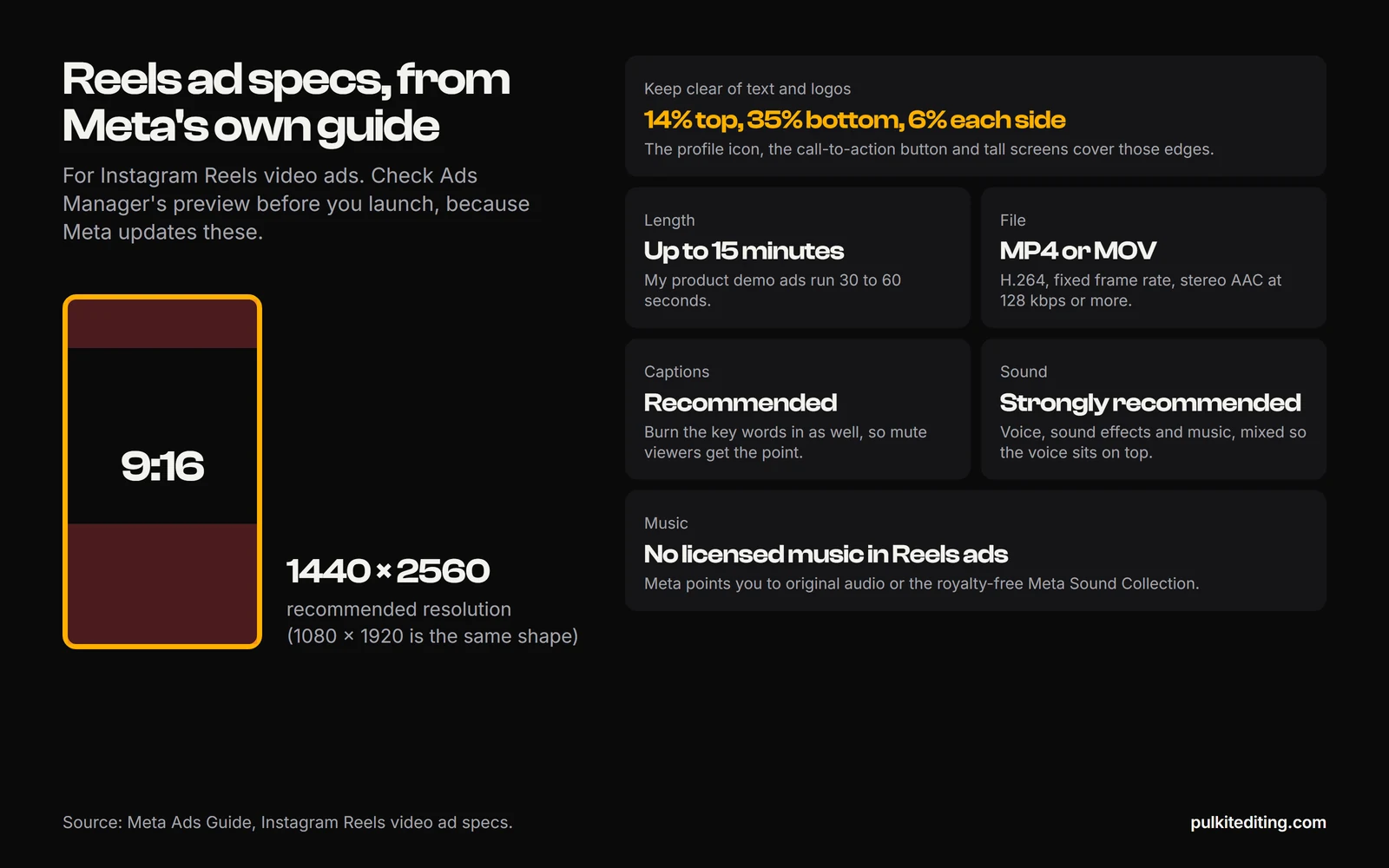
| Spec | Meta's guidance for Reels ads |
|---|---|
| Aspect ratio | 9:16 |
| Resolution | 1440 × 2560 recommended |
| Length | Up to 15 minutes |
| File | MP4 or MOV, H.264, fixed frame rate, stereo AAC audio at 128 kbps or more, up to 4 GB |
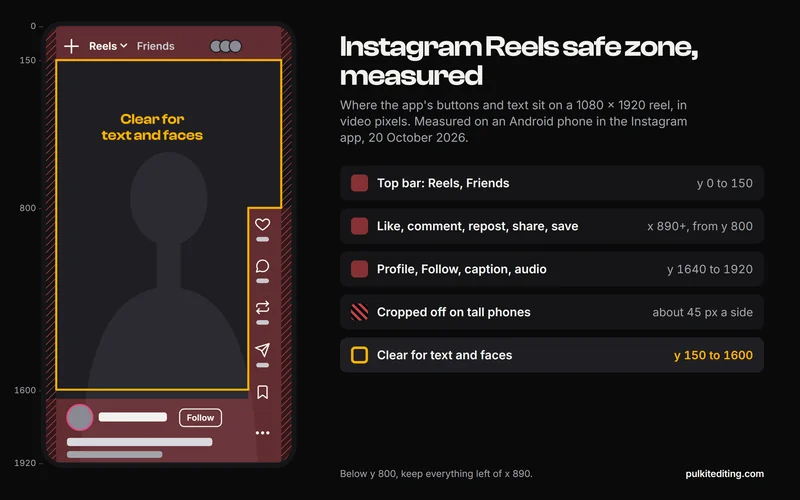
| Safe zone | Keep at least 14% of the top, 35% of the bottom and 6% of each side free of text, logos and other important elements |
| Captions | Optional, but recommended |
| Sound | Optional, but strongly recommended |
| Music | No licensed music; use original audio or the royalty-free Meta Sound Collection |
The ad safe zone is stricter than the one for organic reels, because the call-to-action button and the sponsor label sit on top of an ad. I compared the two, with exact pixels, in my measured Reels safe zone guide.
Product films I've cut
A vertical commercial for Rio Energy Drinks, a product film for RiteBite Max Protein's wafers, and a vertical film for Herbalife's NRG tea.
What to send a studio before the shoot
- The product itself: enough units for the shoot, plus spares of anything that gets opened, poured or eaten.
- Your brand files: logo, colours, fonts and any packaging rules.
- What has worked in your ads so far, and what hasn't. Your best-performing ad is the brief for the next one.
- Customer language: reviews, DMs and the questions people ask before buying. The best hooks are usually in there.
- The claims you are allowed to make, and the offer you will run.
In my studio, the order is fixed: a brief call, then you approve the script and shot list, then the product ships to us from anywhere in India or abroad, then the shoot, then final ads within 14 days, each with 2 revision rounds. Nothing is filmed before you sign off.
Mistakes that waste a product shoot
- Opening on the logo. The first 3 seconds should show the product or the problem.
- Music-led ads with no on-screen words. On mute, they say nothing.
- Claims the ad can't show. If the result isn't on screen, the viewer doesn't believe it.
- One ad in one size. Reels, the feed and YouTube each need their own shape.
- One opening per ad. Without hook variations there is nothing to test.
If you are budgeting the shoot, my breakdown of video editing and production costs in India lists what a quote should include.
Questions people ask
What is the best video ad format for a D2C brand?
There isn't one format for every buyer. A commercial wins attention from people who don't know you, a product demo answers people who are comparing, and a testimonial reassures people who are ready to buy. Most brands need all three, cut in 9:16, 1:1 and 16:9.
How long should a product video ad be?
Meta allows Reels ads of up to 15 minutes, but the product decides. My product demo ads run 30 to 60 seconds, and the first 3 seconds have to show the product or the problem.
What size should a Reels ad be?
9:16. Meta recommends 1440 × 2560 pixels and asks you to keep the top 14%, the bottom 35% and 6% on each side free of text and logos.
Can I use popular music in a Reels ad?
No. Meta's ad guide says Reels ads can't use licensed music, and points you to original audio or the royalty-free Meta Sound Collection.
Do I need to be at the shoot?
Not with a ship-in studio. You send the product and approve the script and shot list; the studio films it, with models or creators where the ad needs them.